


What is the producing process of aluminum slugs?
Aluminum slugs play a critical role in industries like packaging, automotive, and electronics. These small, cylindrical pieces of aluminum support lightweighting in vehicles, improve thermal management in electronics, and enhance sustainability in packaging. The global aluminum slugs market, valued at $3.5 billion in 2023, is projected to grow to $5.6 billion by 2032, reflecting its increasing demand.
Materials Used in Aluminum Slugs Production
Raw aluminum ingots and alloys
The production of aluminum slugs begins with high-quality raw materials. You will find that manufacturers primarily use aluminum ingots, which are large blocks of pure aluminum, and specific aluminum alloys. These alloys are carefully selected to enhance properties like strength, corrosion resistance, and malleability. The choice of alloy depends on the intended application of the slugs, whether for packaging, automotive, or electronics.
Purity standards and alloy properties
Purity plays a crucial role in ensuring the performance of aluminum slugs. Manufacturers adhere to strict purity standards, often exceeding 99% aluminum content, to maintain consistency and reliability. Alloy properties, such as tensile strength and elongation, are equally important. The table below highlights the tolerances for various dimensions of aluminum slugs, ensuring precision in production:
|
Aluminum Slug Diameter (mm) |
Tolerances (mm) |
|---|---|
|
≤10 |
±0.02 |
|
10-40 |
±0.03 |
|
40-60 |
±0.04 |
|
60-80 |
±0.05 |
|
80-120 |
±0.06 |
|
120-150 |
±0.08 |
|
150-200 |
±0.10 |
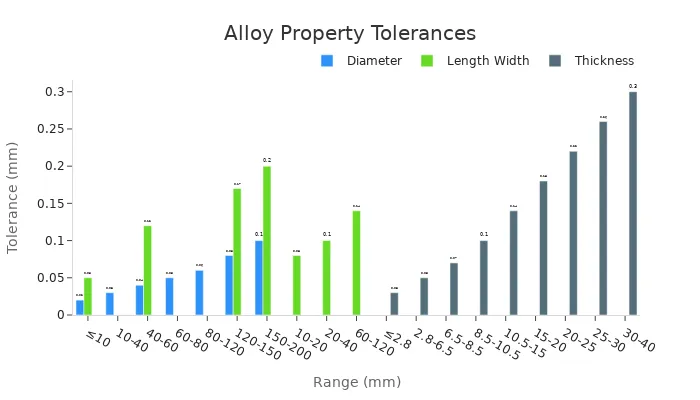
These tolerances ensure that the slugs meet the exact specifications required for their applications.
Preparing aluminum for manufacturing
Before aluminum can be transformed into slugs, it undergoes a preparation process. Techniques like impact extrusion and direct extrusion are commonly used. Impact extrusion produces slugs with excellent surface finish and dimensional accuracy, while direct extrusion allows for flexibility in design and reduced production costs. Advanced techniques, such as automation and CAD systems, further enhance efficiency and consistency. Recycling also plays a significant role, as using recycled aluminum reduces costs and aligns with sustainability goals.
|
Process Type |
Key Features |
Advantages |
|---|---|---|
|
Impact Extrusion |
Produces slugs with excellent surface finish and dimensional accuracy. |
Minimal material wastage, ability to produce complex shapes with precise tolerances. |
|
Direct Extrusion |
Involves pushing aluminum through a series of dies for varied shapes. |
Flexibility in design, customized slug sizes, and reduced production costs. |
|
Advanced Techniques |
Integration of automation and CAD systems. |
Enhanced efficiency, consistency, and improved material usage, reducing costs. |
|
Recycling |
Use of recycled aluminum in production. |
Reduces production costs, minimizes environmental impact, and aligns with sustainability goals. |
By carefully preparing the aluminum, you ensure that the final slugs meet the highest quality standards.
Step-by-Step Manufacturing Process
Melting and rolling aluminum
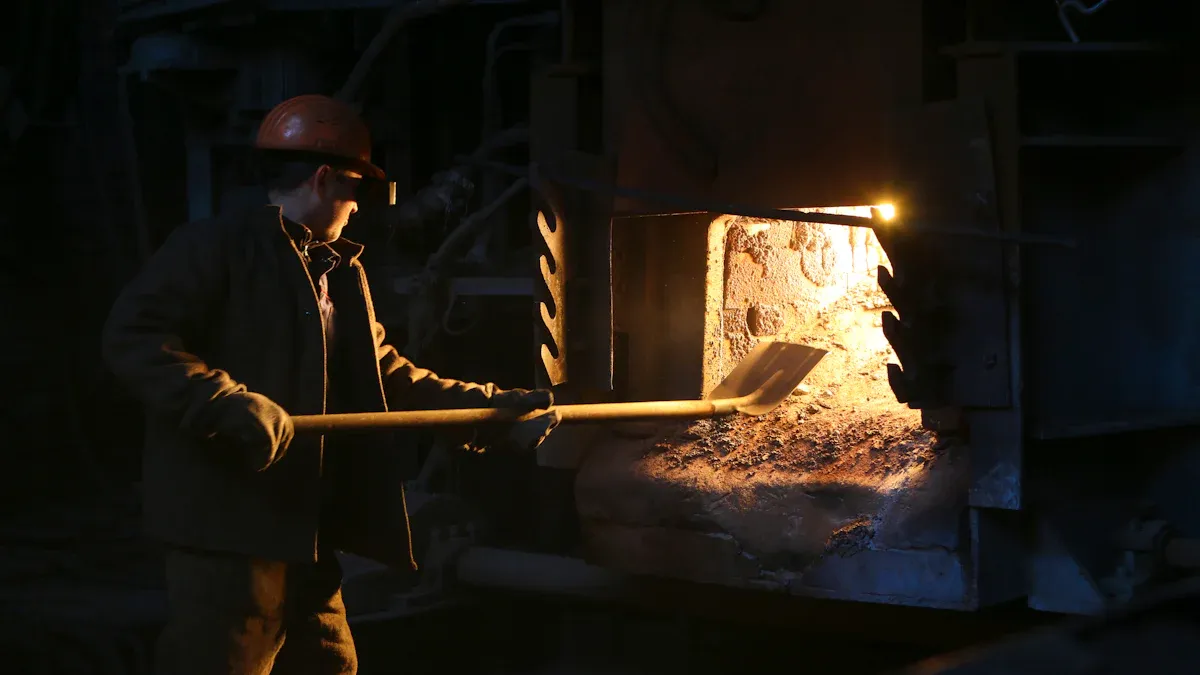
The production of aluminum slugs begins with melting raw aluminum ingots and alloys. You will find that this step ensures the uniformity of the aluminum's composition. The molten aluminum is then cast into narrow strips using precision rotary casting. These strips undergo hot rolling to adjust their thickness, followed by cold rolling for further refinement. Laser measurement tools monitor the thickness during cold rolling, ensuring consistent quality.
|
Step Number |
Process Description |
Key Features |
|---|---|---|
|
1 |
Melting and Alloying |
Ensures accuracy and uniformity of aluminum composition. |
|
2 |
Casting and Hot Rolling |
Adjusts thickness through precision rotary casting. |
|
3 |
Cold Rolling and Laser Measurement |
Uses lasers for precise thickness control. |
Stamping aluminum into slugs
Once the aluminum sheets are prepared, high-speed stamping machines cut them into slug blanks. These machines can achieve speeds of up to 300 strokes per minute, making the process highly efficient. Precision sawing equipment ensures that each slug meets exact size specifications. This step is critical for maintaining the uniformity required for applications in industries like packaging and automotive.
|
Stage |
Description |
|---|---|
|
Precision Sawing |
Cuts aluminum rods into precise slug blanks. |
|
Stamping and Annealing |
High-speed stamping machines ensure efficiency and dimensional accuracy. |
Annealing for ductility
Annealing is a heat treatment process that enhances the ductility of aluminum slugs. You will notice that this step involves heating the slugs to temperatures between 450°C and 600°C. Batch annealing, which takes 5 to 9 hours, reduces oxidation and prepares the slugs for impact extrusion. Continuous annealing, on the other hand, improves the metallurgical grain structure, enhancing both strength and ductility.
|
Process Type |
Temperature Range (°C) |
Time (hours) |
Benefits |
|---|---|---|---|
|
Batch Annealing |
470 - 600 |
5 - 9 |
Reduces oxidation, improves ductility, and prepares slugs for extrusion. |
|
Continuous Annealing |
450 - 570 |
N/A |
Enhances grain structure and mechanical properties. |
Surface treatment for texture
The final step in this process involves surface treatment to improve the texture and performance of aluminum slugs. Techniques like sandblasting or shot blasting remove surface oxides, such as magnesium oxides, which can cause scratches during impact extrusion. You will appreciate that these treatments also enhance the slugs' surface quality, ensuring they meet customer requirements. For instance, slugs treated with shot blasting exhibit minimal eccentricity in wall thickness and no visible scratches, making them ideal for high-precision applications.
-
Material 1 slugs show no visible scratches and minimal wall thickness eccentricity (<0.02 mm).
-
Shot blasting effectively removes surface oxides, improving the slugs' performance during extrusion.
Final Steps in Aluminum Slugs Production
Quality inspection and testing
Quality inspection ensures that aluminum slugs meet the highest standards before reaching the market. You will notice that manufacturers focus on several critical aspects during this stage. These include alloy consistency, dimensional accuracy, surface quality, and mechanical properties. High-precision tools monitor tolerances, while automated systems conduct real-time data analysis to maintain consistency.
|
Inspection Focus |
Description |
|---|---|
|
Alloy consistency and metallurgical pollution control |
Monitoring chemical composition and inspecting for contamination to ensure quality. |
|
Dimension and weight accuracy |
Using high-precision tools for dimensional control and weight grading to meet specifications. |
|
Surface quality and defect detection |
Visual and automated inspections to identify surface defects and ensure quality standards. |
|
Heat treatment and mechanical properties testing |
Controlling heat treatment and conducting tests to ensure strength and toughness of aluminum billets. |
|
Reduce waste and improve production efficiency |
Implementing grading systems to minimize waste and optimize production processes. |
|
Automated and data-driven quality management |
Utilizing automated systems for real-time data monitoring and statistical process control. |
Testing metrics include tensile strength, hardness, and surface defect detection. These rigorous checks ensure that the slugs perform reliably in their intended applications.
Packaging for delivery
Proper packaging is essential to protect aluminum slugs during transportation. You will find that manufacturers use lightweight, durable materials to ensure safe handling and shipping. Aluminum's recyclability makes it an eco-friendly choice for packaging, aligning with sustainability goals.
-
Aluminum slugs are lightweight, reducing shipping costs and improving handling efficiency.
-
Packaging materials protect slugs from contamination, preserving their quality.
-
Recyclable packaging supports environmental sustainability and meets regulatory requirements.
This approach ensures that the slugs arrive in perfect condition, ready for use in industries like automotive and electronics.
Ensuring compliance with industry standards
Compliance with industry standards guarantees that aluminum slugs meet customer expectations and regulatory requirements. Manufacturers adhere to strict guidelines for chemical composition, dimensional accuracy, and mechanical properties. Automated systems play a key role in monitoring these parameters, ensuring consistency and reliability.
You will appreciate that compliance not only enhances product quality but also builds trust with customers. By meeting these standards, manufacturers demonstrate their commitment to delivering high-quality aluminum slugs for various applications.
The production of aluminum slugs follows a meticulous process, ensuring high-quality results. You can see how every step, from sourcing raw materials to packaging, plays a vital role. Rigorous quality control guarantees that these slugs meet industry standards. Their importance in packaging, automotive, and electronics highlights the need for efficient and precise manufacturing.